




Human life is a journey woven with countless blessings at every moment. Eyes that open with the first light of morning, every morsel that nourishes the body, every affection that warms the heart, every piece of knowledge that enriches the mind... All of these are divine gifts reaching the human being, whether they are aware of it or not. However, since these blessings generally reach people through certain intermediaries, causes, and means, human nature often falls into error: it seeks the source of the blessing in the intermediary and directs its gratitude in the wrong direction. It is precisely at this point that the Quran calls humanity to a profound transformation of consciousness, reminding us that gratitude must be directed solely to the true Owner of blessings — Allah, the Creator and Provider of all existence. The Reality of Gratitude and Its Relationship with Faith In the Quran, giving thanks is far beyond an ordinary expression of appreciation; it reflects a profound consciousness of faith. Gratitude means becoming aware that the true source of all blessings is Allah, internalizing this truth in one's heart, and expressing it with one's tongue. This awareness is one of the most fundamental attitudes that reveals the faith of a believer who worships Allah alone. Verse 172 of Surah Al-Baqarah summarizes this reality concisely: "O you who have believed, eat from the good things which We have provided for you and be grateful to Allah if it is indeed Him that you worship." This verse shows that gratitude is not merely a courtesy, but rather a direct manifestation of the belief in Tawhid and sincerity. The expression "if it is indeed Him that you worship" in the verse indicates that gratitude is an inseparable part of pure servitude. A person who is grateful only to Allah has understood that every blessing, every beauty, and every ease in their life occurs under the will and control of Allah. This deep understanding distances a person from shirk and grounds their faith on the pure foundation of Tawhid. The Fundamental Error of Mushriks: Being Grateful to Causes One of the most widespread forms of deviation throughout human history is losing sight of the true source of blessings, venerating the causes, and directing one's gratitude toward them. This error appears in the Quran as a defining characteristic of mushriks. Mushriks are grateful to the trade that brings them wealth, to the physicians who protect their health, to the powers that ensure their security — yet they forget Allah, who created and made all of these operative, or they associate partners with Him. Verse 17 of Surah Al-Ankabut exposes this mistaken understanding with sharp criticism: "You only worship, besides Allah, idols, and you produce a falsehood. Indeed, those you worship besides Allah do not possess for you any provision. So seek from Allah provision and worship Him and be grateful to Him. To Him you will be returned." This verse emphasizes that idols, false deities, and venerated beings possess no real power whatsoever. They have not the slightest influence in providing sustenance, causing harm, or bringing benefit. True power and might belong to Allah alone. Therefore, what an intelligent person must do is correctly identify the source of the blessing and direct their gratitude solely toward that source. Living Models of Gratitude: The Messengers Sulayman and Ibrahim While explaining what gratitude should look like, the Quran does not suffice with abstract concepts but presents concrete examples and living models. Among these models, Allah's chosen messengers — Messenger Sulayman and Messenger Ibrahim — stand out prominently. In Surah An-Naml, an extraordinary event involving Messenger Sulayman is narrated. The throne of the Queen of Sheba is brought before Messenger Sulayman in the blink of an eye. What is Messenger Sulayman's first reaction to this miracle? Does he admire the person who accomplished this feat? No. Messenger Sulayman immediately turns to the true source of the blessing: "When he saw it placed before him, he said, 'This is from the favor of my Lord to test me whether I will be grateful or ungrateful. And whoever is grateful — his gratitude is only for the benefit of himself. And whoever is ungrateful — then indeed, my Lord is Free of need and Generous.'" (Surah An-Naml, 40) This attitude of Messenger Sulayman is the finest expression of a mature faith consciousness. He does not fixate on the intermediary who performed the miracle; he immediately turns his gaze to Allah. Moreover, he sees this blessing as a trial and is aware that he must make a conscious choice between gratitude and ingratitude. This example shows that a believer must connect every event in their life to Allah. Messenger Ibrahim, on the other hand, represents another dimension of gratitude in the Quran. In Surah An-Nahl, it is said of him: "Indeed, Ibrahim was a [comprehensive] leader, devoutly obedient to Allah, inclining toward truth, and he was not of those who associate others with Allah. He was grateful for His favors. Allah chose him and guided him to a straight path." (Surah An-Nahl, 120–121) These verses reveal the inseparable bond between gratitude and Tawhid. Messenger Ibrahim's gratitude to Allah is directly linked to his being a hanif who associated no partners with Allah whatsoever. Gratitude deepens a person's submission to Allah and eliminates the possibility of falling into shirk. Shaytan's Goal: Ingratitude The Quran clearly declares that one of the most important targets Shaytan has set for humanity is to prevent people from giving thanks. In Surah Al-A'raf, Shaytan's address to Allah is conveyed as follows: "He said, 'Because You have put me in error, I will surely sit in wait for them on Your straight path. Then I will come to them from before them and from behind them and on their right and on their left, and You will not find most of them grateful.'" (Surah Al-A'raf, 16–17) Shaytan knows that the most effective way to lead people astray is to drive them into ingratitude. Because ingratitude distances a person from Allah, causes them to forget the source of blessings, and ultimately leads to shirk. Shaytan tries to prevent people from being grateful to Allah by surrounding them from the front, from behind, from the right, and from the left — that is, from every direction. These whispers sometimes come in the form of the allure of worldly pleasures, sometimes the weight of hardships, sometimes arrogance and pride, and sometimes indifference. However, a believer who uses their mind and faith does not fall into these traps of Shaytan. They are conscious that every blessing in their life — and even every difficulty — is a favor and a trial from Allah. This consciousness serves as a solid shield protecting them against Shaytan's whispers. The Trap of Emotionalism and Faith Consciousness Another important factor that prevents a person from being grateful is uncontrolled emotionalism. Powerful emotions such as compassion, affection, anger, fear, and sorrow can disable a person's reason and faith consciousness. In particular, extreme grief in the face of the loss of a loved one can lead a person all the way to rebellion against Allah, objection to divine decree, and even to committing shirk. Yet a believer of mature faith knows that death is also under Allah's absolute decree, that every soul was created with a fixed term, and that for innocent people in particular, death may be a door of salvation from the hardships of this world. This perspective does not eliminate pain, but gives it meaning and does not shake the person's trust in Allah. Acting with faith consciousness rather than succumbing to emotional reactions protects the believer from Shaytan's emotional manipulations. A person who is grateful to Allah sees the wisdom of their Lord in both blessings and hardships, and maintains their submission to Him. The Transformative Effect of Gratitude on Human Life Giving thanks, for the believer, is beyond being merely a religious obligation — it is a state of consciousness that gives meaning to life and transforms it. Seeking the source of blessings in Allah provides the person with the following fundamental gains: Strengthens faith: The grateful person sees the power, mercy, and wisdom of Allah behind every blessing. This constant remembrance keeps faith alive and dynamic. Increases sincerity: A person who is grateful only to Allah is not indebted to any created being and does not sanctify any entity. In this state, they perform their servitude solely for Allah. Protects from shirk: A person who correctly identifies the true source of blessings does not attribute divine qualities to any being, and thus remains distant from shirk. Provides inner peace: A person who is grateful to Allah knows that their Lord is always with them in every situation. This awareness creates a deep sense of peace and security. Gives meaning to life: A grateful person views their life not merely through material gains and pleasures, but as a journey of drawing closer to Allah. This makes both worldly and eternal life meaningful. Gratitude Is the Pulse of Tawhid The human model praised in the Quran is the person who turns to Allah in every situation, gives thanks to Him, and meticulously avoids shirk. Gratitude is one of the clearest indicators revealing the faith consciousness of the believer. Because true gratitude is not merely a word of thanks spoken by the tongue, but a comprehension of truth that takes place in the depths of the heart. Correctly identifying the source of blessings, turning not to intermediaries but to the Origin itself, seeing Allah's mercy in every good and every beauty... This is true gratitude. This consciousness of gratitude protects a person from the traps of Shaytan, prevents them from falling into shirk, and enables them to advance steadily on the path of Tawhid. A believer who is grateful to Allah is a servant who worships only Him, submits only to Him, and seeks help only from Him. The person who grasps and lives this deep understanding of gratitude strengthens their bond with their Lord with each passing day, matures their faith, and attains true salvation both in this world and in the hereafter. Because gratitude is not merely a sign of faith — it is faith itself.

KİTAP İZLERİ
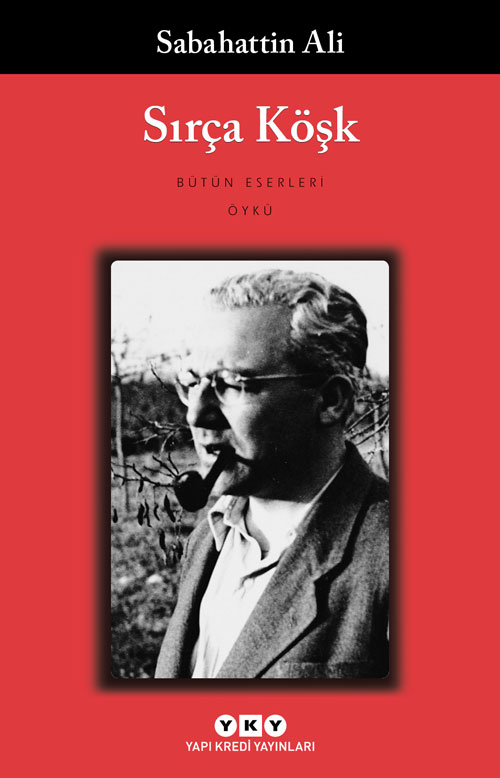
Sırça Köşk
Sabahattin Ali
Sırça Köşk: Yıkılmaya Mahkûm Bir Düzenin Alegorisi Sabahattin Ali, son eseriyle sadece bir öykü kitabı değil, aynı zamanda cesur bir veda ve sarsılmaz bir ithamname
İncelemeyi Oku