




Islam has been lived and interpreted throughout history under various social and political conditions. However, this diversity and these interpretations have sometimes led to a departure from the Quran's original message. Traditional religious understandings, sectarian formations, and hadith-based rulings have over time given rise to practices that conflict with the foundational thought of Islamic belief. The Quran: The Sole Legislative Source of Islam One of the fundamental principles of Islamic belief is the reality that the Quran was revealed by Allah and constitutes Islam's source of ruling. This is not merely a theoretical understanding but a principle explicitly stated within the Quran itself. Verse 44 of Surah Al-Ma'idah presents an exceptionally clear expression on this matter: "And whoever does not judge by what Allah has revealed — those are the disbelievers." This verse clearly establishes that the source of ruling belongs to Allah and that Muslims must adhere to these rulings in every area of their lives. Grounding the doctrinal and practical lives of Muslims in the Quran is an understanding befitting the very essence of Islam. Allah has presented in the Quran all the rulings necessary for organizing human life and has not permitted people to transgress these rulings. In this context, the Quran offers guidance not only in the area of worship but in many fields such as social life, law, economics, and societal order. Traditional Understandings and Deviations Throughout history, the manner in which religion has been practiced in Islamic societies has changed under the influence of various factors. Geographical conditions, cultural structures, political authorities, and social needs have all played a role in shaping religious understanding. However, as a result of these contextual factors, practices contrary to the clear rulings of the Quran have sometimes been legitimized. For example, there are matters that have been declared forbidden through certain sectarian traditions or hadith, despite not being forbidden in the Quran. This situation has unknowingly bound Muslims in chains, steering them to be governed by human rulings rather than by the rulings of Allah. Such a structure means departing from the fundamental principles of Islam and leads people into a false belief. Shirk: Its Definition, Types, and Dangers According to Islamic belief, shirk means associating partners with Allah. However, the concept of shirk carries a broader meaning beyond merely direct deification. Shirk means replacing Allah's rulings with other rulings, distorting Allah's commands, and presenting these distorted rulings to people as if they were religion. Verse 23 of Surah Al-An'am clearly demonstrates the consequence of this situation in the hereafter: "Then their only plea will be to say, 'By Allah, our Lord, we were never mushrik.'" This verse states that the mushrikeen will attempt to clear themselves in the hereafter but will fail. Even if these individuals prayed, fasted, and attended gatherings of knowledge in this world, the acts of worship they built upon a false belief will not save them. What is important at this point is that acts of worship gain meaning not merely through their outward form, but through the correctness of the intention they contain and their doctrinal foundation. Acts of worship built upon a false doctrine hold no value before Allah, no matter how completely they are performed. The Importance of Unity in the Source of Ruling The pluralization of the source of ruling in Islam leads to serious problems in terms of societal order and individual peace. The existence of more than one source of ruling in a society inevitably causes conflicts, duality, and social agitation. Verse 113 of Surah Hud presents an important structure that emphasizes this danger: "And do not incline toward those who do wrong, lest the Fire touch you. You have no protectors other than Allah. Then you will not be helped." This verse expresses that not only supporting unjust rulers but even loving them, appreciating them, and adopting their views can drive a person to the torment of hell. If we think of this in a modern context, supporting those who misrepresent religion, those who distort religion, and placing their rulings above the rulings of the Quran amounts to supporting the propagation of a form of oppression. This will cause the person to be held accountable in the hereafter. The Relationship Between the View of the Majority and the Truth People tend to frequently use numerical majority as a measure to determine right from wrong. If something is accepted by many people, it is assumed to be correct. However, the Quran clearly establishes that this thinking is wrong. Verse 116 of Surah Al-An'am presents a very clear warning on this matter: "If you were to follow most of those on earth, they would lead you away from the path of Allah. They follow nothing but assumption, and they do nothing but conjecture." This verse emphasizes several important truths: First, the opinions of the majority are not always correct. The great majority of people can err and hold false beliefs. Second, an opinion accepted by the majority is nothing but conjecture — that is, assumption and speculation. Third, the result of following the majority is deviation and distance from guidance. In this context, the correctness of religious understanding must not be determined by numerical majority. The measure is the Quran alone. Everything that is in harmony with the Quran is correct; everything that conflicts with the Quran is wrong. This is a valid principle in matters of religion as well as in matters of culture and tradition. The Influence and Responsibility of Traditional Opinion Leaders Throughout history in Islamic societies, certain individuals have been accepted as opinion leaders or religious scholars, and their views have gained authority equal to or greater than the rulings of the Quran. This structure has led to the personalization and sanctification of religious understanding. However, no human being carries enough authority to replace the Quran. Scholars, learned individuals, and leaders are people who endeavor to convey the Quran correctly. However, they can make mistakes and put forward erroneous views. If a scholar's view conflicts with the Quran, the Quran must be preferred. Beyond this, supporting traditional opinion leaders, sanctifying them, legitimizing their false rulings, and presenting them to society means becoming a partner in the wrongs they commit. A person in such a situation will stand accountable alongside these opinion leaders in the hereafter. The Validity of Worship and the Role of Doctrine In Islam, acts of worship are not merely physical movements. Worship is an act performed by body, mind, and soul together. If the doctrine is wrong, the act of worship becomes invalid. A person may pray in a completely correct manner, keep the fast without omission, and wish to give zakat — but if these acts of worship are grounded in a false belief, they will have no value before Allah. Because in Islam, worship must be sincere, pure, and directed solely toward Allah. Any partner, any intermediary, any tradition, or any human being can interfere with this purity and render acts of worship invalid. In this context, acts of worship built upon tradition are invalid due to the wrongness of their doctrinal foundation, regardless of how perfect their form may be. The Muslim, during worship, must keep only Allah in view, worship Allah alone, and seek only Allah's pleasure. The Sufficiency of the Quran The Quran is entirely sufficient as regards Islam's system of ruling. Allah has presented in the Quran all the rulings that human beings need to organize their lives. The Quran presents a completely harmonious system of rulings containing no contradictions within itself. This system is sufficient to meet all the needs of human beings. Salvation in Islam is realized only under the guidance of the Quran. Traditional understandings, sectarian formations, and hadith-based rulings, if they conflict with the Quran, can unknowingly lead Muslims into shirk. This danger is not merely theoretical; it is a practical reality with serious consequences in the hereafter. There are questions every Muslim must ask themselves at this point: Upon what do I base my faith? According to whose rulings do I organize my life? Are tradition and traditional opinion leaders my measure — or are the clear rulings of the Quran? If in answering these questions, tradition, a sect, or opinion leaders take priority, the situation is a serious problem. Verse 44 of Surah Al-Ma'idah stands as a warning directed at all Muslims: "And whoever does not judge by what Allah has revealed — those are the disbelievers." This verse demonstrates that the validity of religion is tied to the Quran. The source of ruling is Allah, and what He revealed is the Quran. Beyond this, everything else — no matter how respected or traditional — holds no validity in matters of religion. Every individual who wishes to understand and live Islam must hold firmly to the guidance of the Quran, question traditions, and whenever a conflict arises between tradition and the Quran, always choose the Quran. Only in this way can doctrinal purity and preparation for the hereafter be achieved. Otherwise, one has unknowingly entered into a deviation, and this deviation may not be recognized until the Day of Reckoning arrives.

KİTAP İZLERİ
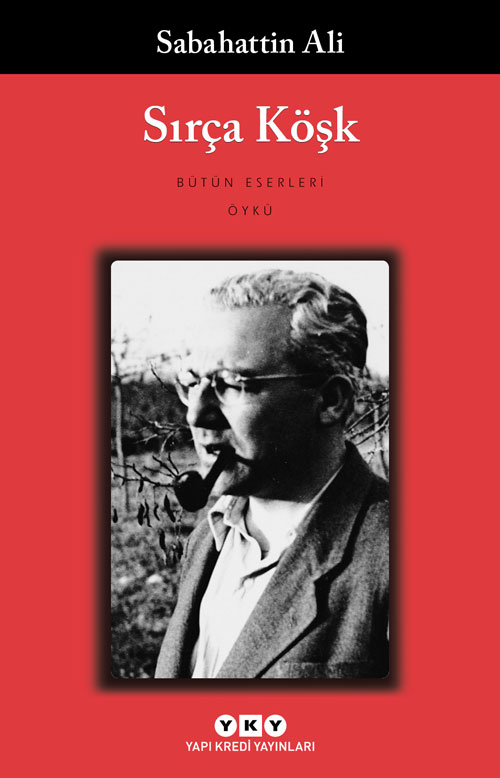
Sırça Köşk
Sabahattin Ali
Sırça Köşk: Yıkılmaya Mahkûm Bir Düzenin Alegorisi Sabahattin Ali, son eseriyle sadece bir öykü kitabı değil, aynı zamanda cesur bir veda ve sarsılmaz bir ithamname
İncelemeyi Oku