




Islam, rooted in the Arabic word meaning "to submit," finds its true meaning not merely in spoken declaration but in a sincere devotion that takes place in the deepest recesses of the heart. Today, the concept of "Muslim" is largely used as a geographical, cultural, or demographic label — a departure from Islam's very essence. Millions of people registered as "Muslim" on population records remain Muslim in name only, without undergoing the heartfelt and spiritual transformation this religion demands. Yet Islam is not a phrase written on an identity card; it is a way of life in which a person dedicates their entire being to God, surrenders to His will, and lives that surrender in every moment. The Qur'an draws a clear distinction between believer (mu'min) and Muslim. In verse 14 of Surah Al-Hujurat, the following is said regarding the desert Arabs: "The bedouins say, 'We have believed.' Say, 'You have not yet believed; but say instead, 'We have submitted,' for faith has not yet entered your hearts.'" This verse highlights the fundamental difference between outward submission and the heart's inner transformation. Being Muslim may mean fulfilling Islam's formal requirements; but being a believer requires grasping the spirit of those requirements and connecting with God through the heart. Faith and Islam: Two Distinct Concepts, One Goal In Islamic history and in the Qur'an, the concepts of faith (iman) and Islam are treated in their different dimensions. Islam means a person's submission to God and His messenger, and outward acceptance of Islam's commandments — concretized through acts of worship such as prayer, fasting, and giving alms. Faith, however, goes far beyond this. Faith encompasses the heart's deep devotion to God, trust in Him, love, reverence, and complete surrender. This distinction is not merely a theoretical debate; it is a reality with very significant practical consequences. A person may appear from the outside to be fulfilling all Islamic duties, yet if their heart is distant from God, those acts of worship become nothing more than mechanical rituals. The Qur'anic verse "Say: Indeed, my prayer, my rites of sacrifice, my living and my dying are for God, Lord of the worlds" (Al-An'am 162) emphasizes that a true believer's every moment and every breath must be dedicated to God. This means life is not lived in fragments — no separation is drawn between worship and daily existence. Dhikr: Merely Remembering God, or Turning Toward Him? The concept of dhikr holds a central place in Islam. Yet dhikr should not be understood merely as repeating God's names or reciting certain prayers. In the Qur'anic sense, dhikr means remembering God, turning toward His revelation, feeling His presence in every area of life, and living in accordance with His will. It is a person's glorification of God through their entire life — never forgetting Him and taking refuge in Him in every circumstance. Abandoning the remembrance of God is the beginning of the path toward shirk — associating partners with God. Surah Taha, verse 124, states: "And whoever turns away from My remembrance — indeed, he will have a depressed life, and We will gather him on the Day of Resurrection blind." This verse shows that turning away from God harms not only the afterlife but this worldly life as well. The "depressed life" manifests not only as material poverty but as spiritual emptiness, restlessness, loss of meaning, and societal decay. At the root of the difficulties experienced by many Muslim societies today lies this spiritual void. The Islamic world, endowed with rich natural resources, large populations, and strategic locations, unfortunately grapples with political instability, economic hardship, educational deficiencies, and social injustice. The fundamental reason is the departure from God's revelation and the reduction of Islam to traditional rituals and sectarian interpretations. Shirk: Merely a Doctrinal Error? In Islam, shirk — associating partners with God — is considered the gravest of sins. In Surah Luqman, verse 13, Luqman's counsel to his son reads: "O my son, do not associate anything with God. Indeed, association with Him is great injustice." Shirk is not only the worship of idols; placing absolute trust in beings, powers, people, or systems other than God — seeking relief from them — is also shirk. In the modern age, shirk can take different forms. Money, power, fame, ideologies, nationalism, leaders, or even religious sects can become forms of shirk when placed in God's stead. If a person organizes their life not according to God's will but according to other things, and dedicates their heart not to God but to worldly desires, they are engaged in shirk. This produces serious consequences both individually and socially. Shirk erodes a person's surrender to God and makes them dependent on other entities. This dependency leads to the loss of freedom, inner restlessness, and social injustice — because no power other than God possesses absolute justice, mercy, and wisdom. Humans, institutions, and ideologies can err, make mistakes, and oppress. But God's will is perfect and just. For this reason, surrendering solely to God is the path to true freedom and peace. Traditional Religious Understanding and Turning Away from God The prevalent religious understanding in Muslim lands today unfortunately rests on traditional hadiths, sectarian jurisprudence, and cultural practices. The Qur'an — Islam's foundational source — has been pushed to the margins, replaced by centuries-old interpretations and narrations. This amounts to turning away from God's word and granting absolute authority to human interpretations — which is itself a form of shirk. The Qur'an is a universal guide valid for all times, requiring people in every age to return to it directly. Yet sects, orders, and traditional religious outlooks have interpreted the Qur'an through their own lenses, forcing it into fixed molds. Over time these molds have hardened into immovable dogmas, and Islam's dynamic, life-giving message has been reduced to a rigid set of rules. This approach amounts to abandoning the remembrance of God. For true dhikr is reading God's word, understanding it, reflecting upon it, and putting it into practice. Yet in traditional religious understanding, the Qur'an has often become a text recited without comprehension — sought for its blessing, but its content ignored. This is a dangerous approach that kills the spirit of Islam and reduces it to a merely formal religion. The Trials of Muslim Societies and the Role of Shirk Looking today at countries with large Muslim populations, we find they possess abundant oil reserves, strategic locations, and young demographics. Yet most of these countries struggle with serious problems: poverty, unemployment, inadequate education, political instability, and social injustice. The fundamental reason for this paradox is the departure from God's revelation and the fall into shirk. As stated in Surah Taha, verse 124, those who abandon the remembrance of God will have a constrained life. This constraint is not only material deprivation but spiritual collapse as well. When a society does not truly surrender to God, it drifts away from justice, compassion, and honesty. Corruption, oppression, and wrongdoing become widespread. Trust among people erodes. Social solidarity gives way to selfishness. The solution to these problems lies not in extracting more oil, purchasing more weapons, or imitating the West. The solution is returning to the essence of Islam, properly understanding the Qur'an, and putting it into practice. God's revelation forms the foundation of social justice, economic prosperity, scientific progress, and spiritual peace — but this revelation must not merely be read; it must be understood and lived. True Islam: The Heart's Transformation and the Rebuilding of Life True Islam is a way of life in which a person dedicates their entire being to God, ordering every moment according to His pleasure. It is not limited to attending Friday prayers, fasting in Ramadan, or performing the Hajj. True Islam is being honest in business, acting fairly in trade, being merciful within the family, contributing to society, protecting the environment, championing justice, and standing against oppression. Surah Al-An'am, verse 162, expresses this truth most beautifully: "Say: Indeed, my prayer, my rites of sacrifice, my living and my dying are for God, Lord of the worlds." This verse shows that in a believer's life there is no division between worship and daily existence. Every moment, every action, every thought is dedicated to God. This is not a totalitarian religious understanding — quite the contrary, it is a liberating perspective. For a person bows to no authority, power, or pressure other than God. True Islam also encourages reason, knowledge, and critical thinking. The Qur'an calls people to think, investigate, and question. The verse "Indeed, in the creation of the heavens and the earth and the alternation of the night and the day are signs for those of understanding" (Al-Imran 190) underscores the importance of intellect and thought. Islam is grounded not in dogmatism but in conscious faith. Therefore, questioning traditional understandings, reading the Qur'an directly, and striving to comprehend it is every believer's right and responsibility. The Key to Societal Salvation: Tawhid and Surrender The only way for Muslim societies to escape their present difficulties is to return to the understanding of tawhid — the oneness of God — and to live in complete surrender to Him. Tawhid means believing in God's oneness and uniqueness, worshiping Him alone, and making His will the foundation of every area of life: politics, economics, education, law, and social relations. Avoiding shirk means keeping away from every kind of idol. These idols may be visible or invisible: ideologies, leaders, traditions, sects, nationalism, materialism. Whatever is placed in God's stead is an idol — and every idol robs a person of their freedom, their peace, and their true happiness. The warning of Surah Luqman, verse 13, holds true for every age: "Do not associate anything with God, for association is indeed great injustice." This injustice is not only a wrong done to God; it is a wrong a person does to themselves. For when a person surrenders to God, they reach their true self, their innate nature (fitra). When they drift away from God, they drift away from their own essence and become lost. Surrendering with the Heart Islam is not an identity — it is a way of life. Being Muslim is not merely wearing a label; it is surrendering to God with heart, soul, and body. This surrender cannot be confined to an outward form; it occurs in the heart's depths and is reflected across the whole of life. Today, the notion of "Muslim country" needs to be reconsidered, and Islam must be lived in its true meaning. This requires questioning traditional religious understandings, placing the Qur'an at the center, avoiding shirk, and holding firmly to God's revelation. Only through such a transformation can individual peace and societal prosperity become possible. Abandoning the remembrance of God leads to a constrained existence and spiritual blindness. Turning toward God is the key to salvation — in this world and the next. True Islam is the heart opening to God, the mind being illuminated, and life being rebuilt according to His pleasure. Walking this path is both an individual responsibility and a collective duty. In conclusion, returning to the essence of Islam — sincerely connecting with God through faith, understanding and living His revelation, avoiding shirk, and placing remembrance at the center of life — is the guarantee of both individual salvation and societal peace.

KİTAP İZLERİ
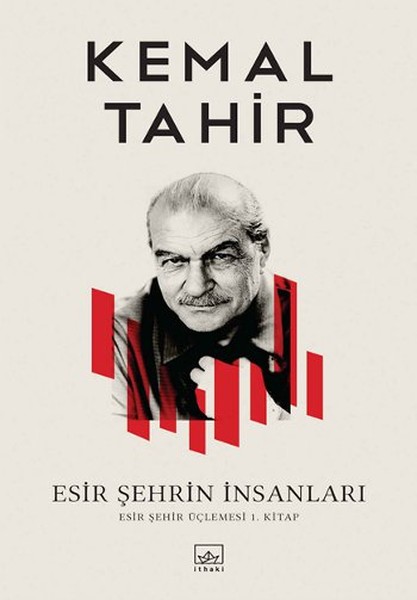
Esir Şehrin İnsanları
Kemal Tahir
Kemal Tahir’in İşgal İstanbul’unda Parçalanan Bir Ruhun Portresi Bir imparatorluk çökerken geride kalanların ruhunda açılan yaraları, bir ulusun en karanlık anlarında kendi kimliğini nasıl aradığını
İncelemeyi Oku