




Islam literature has continued to debate the concept of "houri" for centuries. While traditional understanding defines houris as sexual rewards offered to men in paradise, this interpretation has neither a linguistic nor a Quranic foundation. The Etymology and Grammatical Structure of the Word "Houri" The word houri is of Arabic origin, rooted in the term "hawar" (h-v-r). In Arabic, the singular forms of the word diverge as follows: ahwar for masculine and hawrā for feminine. The plural form is hūr (ḥūr), and notably this plural form is the common plural of both the masculine and feminine singular forms. In other words, the word "hūr" encompasses not only women but is a gender-neutral plural covering both men and women together. In Turkish and Persian, this plural form is used in the singular sense as "huri." This is a transformation commonly encountered in loanwords from Arabic in both languages. It is important to draw attention to the difference between languages here. Turkish is a genderless language; the pronoun "o" (he/she/it) is used for both men and women as well as inanimate objects. Arabic, on the other hand, has a grammatical masculine/muzakkar and feminine/müennes distinction. Translations made by disregarding this linguistic structure have laid the groundwork for the concept being misinterpreted along gender lines. The Shared Root Between "Hūr" and "Hawari" The root of the word, "hawar," appears not only in the Quranic descriptions of paradise but also in the word "hawari," which describes the chosen disciples of our Prophet Jesus. The meanings of the concept of hawari can be listed as follows: chosen, flawless, self-sacrificing companion, friend, one who greatly helps another, a person who dedicates themselves to a cause. This shared root is not coincidental. The semantic framework of the word houri also overlaps with hawari: a loyal, distinguished, pure-hearted friend who shares a spiritual fellowship. Therefore, houri, by origin, evokes friendship, loyalty, and spiritual togetherness before sexuality. Quranic Usages and the True Meaning The singular form of the word houri does not appear in the Quran; it occurs only in its plural form in a few places. In these verses, houris are addressed generally in the context of spouses and companions in paradise, with emphasis placed not on sexuality but on purity and cleanliness. When the words "hūr" and "ʿīn" are used together — in the form "ḥūrun ʿīnun" — the meaning becomes "those with large, bright eyes." This expression describes the type of eye most admired by Arabs, namely the gazelle eye with very white whites and very dark irises. It is important to note that this depiction is a gender-neutral description used to express the beauty of both men and women. Looking at verse 33 of Surah An-Naba, the matter becomes even clearer. In the translation by Ali Bulaç, the word "kaʿaba" in this verse is rendered as "girls whose breasts have just budded," yet the actual meanings of the verb "kaʿaba" are: being striking, dazzling, magnificent, and superior. When the word is used for a person, it means: made that person dazzling, magnificent, or wonderful. The word "atrāb" in the verse means peers, perfect equals. The correct translation of the verse in this context should therefore be: "Young and peer-matched spouses." Any sexual connotation is absent from the original meanings of the words; this meaning was later introduced into the verse from hadith culture. Spouses in Paradise in the Quran: The Principle of Equality In various surahs of the Quran, there are explicit statements regarding spouses in paradise. What is striking in these verses is that, without distinguishing between men and women, it is emphasized that believers will be together with "perfectly pure spouses" in paradise. In Surah Al-Baqarah, verse 25, it is stated: "And give glad tidings to those who believe and do righteous deeds; surely for them are gardens beneath which rivers flow... In there they shall have purified spouses." In Surah Al-Imran, verse 15, the phrase "purified spouses... for those of taqwa" is repeated; and in Surah An-Nisa, verse 57, the same emphasis continues. None of these verses contain any indication that the spouses are allocated exclusively to men. On the contrary, it is explicitly stated in many verses that believing men and women will equally benefit from the blessings of paradise. Surah An-Nahl, verse 97, most clearly establishes this equality: "Whoever does righteousness, whether male or female, while being a believer — We will surely cause them to live a good life, and We will surely give them their reward according to the best of what they used to do." In Surah Al-Imran, verse 195, it is also stated: "I will not allow the deeds of any of you, male or female, to be lost; you are of one another." This divine declaration openly proclaims that the blessings of paradise will be distributed regardless of gender. The Contradictions of the Traditionalist Interpretation While the traditionalist understanding maintains that a man will be with at least 70 houris in paradise, it deems a woman worthy only of her earthly husband. This approach contains a deep internal contradiction. First and foremost, this interpretation is grounded not in the Quran but in hadith literature. The Quran makes no such distinction anywhere. Moreover, this understanding depicts paradise as a male-dominated harem arrangement and positions women merely as a part of this arrangement. Yet one of the fundamental principles of the Quran is that superiority in the sight of God is measured not by gender but by taqwa: "Indeed, the most noble of you in the sight of Allah is the most righteous of you." (Al-Hujurat, 13) Another problem with the traditionalist interpretation is its failure to grasp the balance between soul and matter. Paradise is not merely a place where material pleasure is experienced; it is the pinnacle of spiritual maturity. Interpreting the blessings of paradise purely within the framework of bodily desires means narrowing this reality. Soul, Body, and the Blessings of Paradise To make sense of life in paradise, it is necessary to correctly understand the soul-body relationship. In worldly life, the soul is bound to a single body. Paradise, on the other hand, is a form of existence where unlimited blessings will be experienced simultaneously. Within this framework, it is possible for a single soul to manifest in many different bodies in paradise. This understanding answers the following question: Will spouses in paradise be together, or will a separate harem be offered to the man? The answer is simple: Spouses will be together. However, in paradise, a spouse represents an infinite togetherness in which the same soul can manifest in different forms. Just as a man's spouse may appear to him in thousands of different forms, a woman's spouse may also manifest to her in countless different ways. This equality is in full harmony with the Quran's principle of justice. The example of fingers makes this abstract reality concrete: There are ten fingers on two hands. A person can feel all ten fingers simultaneously, because they are all extensions of the same soul. Similarly in paradise, a single soul will be able to experience infinite experiences simultaneously. An Evaluation in Light of Surah Al-Ma'idah, Verse 13 In verse 13 of Surah Al-Ma'idah, God says: "So for their breaking of the covenant We cursed them and made their hearts hard; they distort words from their proper usages." This verse describes not only a historical event but a tendency toward deviation that can repeat itself in every age. The detachment of words from their original meanings first seeped into commentaries, then into social perception, and has shadowed the Quran's message across generations. The word houri stands as one of the most striking examples of this distortion. This deeply rooted concept, which expresses friendship, purity, and spiritual togetherness, was over time filtered through hadith and transformed into an image of a sexual reward. The concept of houri expresses, by origin, purity, distinction, and self-sacrificing friendship. Grammatically, it is a gender-neutral plural; that is, it encompasses not only women but both men and women. Its usage in the Quran describes the pure spouses and companions in paradise. The presentation of the houri in traditional interpretations as a sexual reward exclusive to men contradicts the Quran's principle of justice, the grammatical structure of the word, and the holistic message of the verses. Believing men and women hold equal value and dignity in the sight of God, both in this world and in paradise. The blessings of paradise will be offered fairly without granting privilege to one gender. The houri is not a sexual fantasy; it is a ground of pure friendship and togetherness in the depths of souls, where God is remembered and glorified. Understanding the Quran through the Quran places this concept in its proper position, removes the doubts in the hearts of both women and men, and clearly reveals the infinite justice of God.

KİTAP İZLERİ
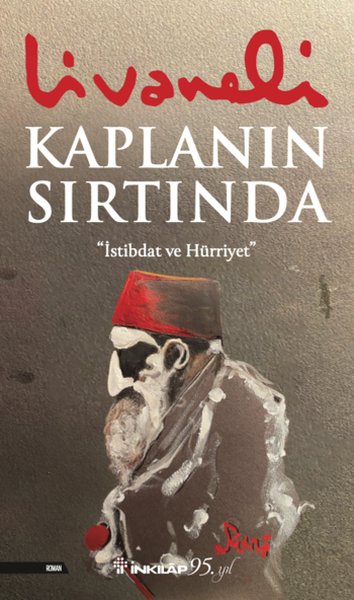
Kaplanın Sırtında: İstibdat ve Hürriyet
Zülfü Livaneli
Kaplanın Gözünden İktidar: Livaneli’den II. Abdülhamid’e Cesur Bir Bakış Türk edebiyatının ve düşünce dünyasının usta kalemi Zülfü Livaneli, son romanı "Kaplanın Sırtında: İstibdat ve Hürriyet"
İncelemeyi Oku