




The moral boundaries in Islam have been shaped over centuries by both jurisprudential scholars and social practice. In this process, Quranic verses have at times been interpreted out of context, leading to rulings that the original text never intended being presented as fundamental rules of the religion. The notion that "looking at the opposite sex is forbidden" is perhaps the most widespread of such interpretations. So what does the Quran actually say on this matter? What can be understood when the verses are examined in their own context? Surah Al-Isra, Verse 32: Preventing Adultery or Prohibiting the Gaze? "And do not approach unlawful sexual intercourse. Indeed, it is ever an immorality and is evil as a way." (Al-Isra, 32) This verse is one of the most frequently cited in arguments that looking at the opposite sex is forbidden. However, to understand the verse correctly, one must first look at its context. Between verses 23 and 38 of Surah Al-Isra, a comprehensive list of Islam's fundamental moral principles is presented. Among these principles are respect for parents, protection of orphans' rights, justice in weights and measures, and avoiding arrogance and pride — a wide range of distinct commandments. The prohibition of approaching adultery is part of this general moral framework. A particularly noteworthy aspect of the verse is this: it says "do not approach adultery," not simply "do not commit adultery." This phrasing emphasizes that the structural and social ground that leads to adultery must also be eliminated — places where immorality is openly displayed, or the circulation of obscene content in society. Not a single word about looking at the opposite sex appears in this verse. To interpret it in such a way is to push the boundaries of the text's meaning. Surah An-Nur, Verse 30: What Does "Guarding the Eyes" Mean? "Tell the believing men to reduce some of their vision and guard their private parts. That is purer for them. Indeed, Allah is acquainted with what they do." (An-Nur, 30) This verse carries particular importance as it contains the most direct expression on the subject. The verse clearly commands "guarding the eyes," but what this command encompasses must be examined carefully. The phrase "refraining from what is forbidden," when considered within the Quran's general use of language, does not carry the meaning of a prohibition limited solely to looking at the opposite sex. Haram (the forbidden) is a broad concept defined across many different contexts in the Quran. Just as pork is forbidden, so too are alcohol, drugs, tobacco, usury, slander, and oppression. In that case, the command to guard one's eyes from the forbidden carries the meaning of turning one's gaze away from anything that could form the basis of any sin. A clear and explicit ruling that looking at the opposite sex is directly forbidden is not present in this verse. When the Quran intends to declare something forbidden, it uses an exceptionally clear and direct language. Pork has been declared forbidden in unambiguous terms. If looking at the opposite sex were to be placed in the same category, one would expect an equally explicit ruling — and no such ruling exists in the Quran. Surah Al-Ahzab, Verse 52: What Does the Prophet's Attitude Signify? "Not lawful to you, [O Muhammad], are [any additional] women after [this], nor [is it] for you to exchange them for [other] wives, even if their beauty were to please you, except what your right hand possesses. And ever is Allah, over all things, an Observer." (Al-Ahzab, 52) This verse addresses the Prophet Muhammad directly and regulates the rulings concerning his marriages. However, an important detail it contains sheds a different light on the matter: the verse explicitly states that the Prophet could be affected by the beauty of women. The phrase "even if their beauty were to please you" reveals that the Prophet was capable of observing a woman's beauty and making an assessment in that regard. If looking at women were a forbidden act, this would certainly need to have been made clear by the Quran's language, which clarifies even the finest details. Moreover, the Quran states with utmost clarity the prohibition on others marrying the Prophet's wives. No comparable clarity exists on the matter of looking at the opposite sex. On the Source of the Superstition So how has such a widespread understanding become so deeply rooted, despite having no basis in the Quran? There are several fundamental reasons. First, narrations in hadith literature expressing that "looking with desire is considered adultery" have, over time, been over-interpreted to lay the groundwork for prohibiting the act of looking altogether. Yet this expression addresses the matter of intent and desire — it does not categorically prohibit the act of looking. Second, the social norms of the era were carried into the text within the tradition of Quranic commentary (tafsir). Practices such as the gender segregation in medieval Islamic societies and keeping men and women apart in the public sphere gradually began to be perceived as religious obligations. Third, when Quranic verses are read piecemeal rather than holistically, a shift in meaning becomes inevitable. When a single verse is read in isolation from the general message of the surah it belongs to and from the entire moral framework of the Quran, it can be pulled toward a different meaning. The Real Issue: Intent and the Nature of the Gaze The Quran's understanding of morality encompasses not only actions but also intentions. From this perspective, what is decisive in the matter of the gaze is its quality — that is, the intent behind the gaze and where it leads the individual. If a look directs a person toward evil, adultery, or another sin, it can be said that such a look is problematic. However, this does not mean that every glance at the opposite sex is forbidden. Making eye contact with the opposite sex in the natural flow of daily life, seeing them, or communicating with them is not an act the Quran declares forbidden. Indeed, in many of the stories told in the Quran, male and female characters are present in the same space, speak to one another, and see one another. The Prophet Moses's encounter with two young women at the well in Midian, and Solomon's meeting with the Queen of Sheba, are just a few examples. In these stories, no emphasis whatsoever is placed on the notion that looking at the opposite sex is forbidden. Conclusion The Quran sets out forbidden rulings in clear and explicit language. An explicit ruling that looking at the opposite sex is forbidden does not appear in the Quran. Surah Al-Isra, verse 32 commands keeping away from adultery and the paths that lead to it. Surah An-Nur, verse 30 advises guarding one's gaze from all that is forbidden. Surah Al-Ahzab, verse 52 demonstrates that the Prophet Muhammad was capable of noticing a woman's beauty, and points to the fact that no separate prohibitive ruling exists on this matter. This picture shows that the understanding that looking at the opposite sex is directly forbidden was shaped not in the Quran itself, but through historical and cultural processes of interpretation. For a sound understanding of religion, it is necessary to read the Quran holistically and contextually — freed from superstitions, cultural biases, and interpretations torn from their context. What matters is not the quantity of one's gaze, but the purity of one's intention and the effect of one's conduct on public morality.

KİTAP İZLERİ
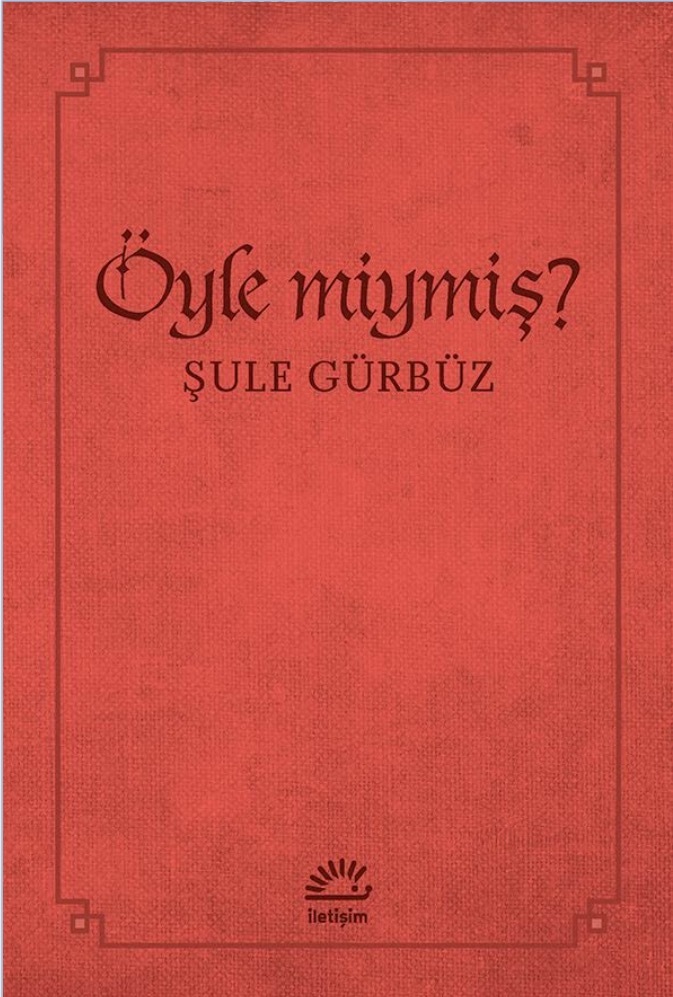
Öyle miymiş?
Şule Gürbüz
Şule Gürbüz’ün Zaman ve Anlam Arasındaki Yankısı Bir kitabı roman yapan nedir? Belirli bir olay örgüsü, gelişen karakterler, diyaloglar mı? Şule Gürbüz’ün “Öyle miymiş?” adlı
İncelemeyi Oku