



From the early periods of Islamic history, the matter of shrine visits and seeking help from the dead has been a subject of debate, and today it continues to occupy an important place in the daily religious practices of Muslim communities. From the Ervah Cemetery in Aksaray to the Telli Baba Shrine, from the Alihan Baba Shrine in Aydın Efeler to the tomb of Muhammed Zühdî in Nazilli, many such places are visited in hope of help and healing. These practices woven around the tombs of historical figures such as Abdul Qadir Gilani, Mahmud Hüdayi and Sheikh Hasan require evaluation from the combined perspectives of religion, psychology, sociology and neuroscience. Here we will comprehensively address why these practices constitute shirk from the standpoint of Islamic creed, the psychological origins of these beliefs in the human mind, their mechanisms of social spread, and the psychopathological processes that create susceptibility to these practices. THEOLOGICAL FRAMEWORK — EVALUATION OF SHRINE PRACTICES IN THE LIGHT OF THE QURAN The Principle of Tawhid and the Dedication of Supplication to Allah Alone The fundamental principle of Islam, tawhid, establishes that only Allah is worthy of worship and petition for help. The phrase read in every prayer in Surah Al-Fatiha — "Iyyaka na'budu wa iyyaka nasta'in" — "You alone we worship and You alone we ask for help" — is the most concise and incisive expression of this principle. This verse is not merely a prayer text; it is a declaration of creed. It defines the addressee of worship and petition for help in a manner that leaves no room for any interpretation or intermediary. Supplication (dua) in Islamic terminology is not merely a verbal request; it is a form of worship that contains obedience, humility, consciousness of servitude and submission. This definition clearly establishes that supplication must be directed only to Allah, and that if directed to another being, the act of worship also transforms into shirk. The Helplessness of the Dead and Their Ignorance of the Unseen The most fundamental theological problem with shrine practice is that the dead — however righteous they may be — are treated as living beings possessed of agency. The Quran is extremely clear on this matter: "And who is more astray than one who invokes besides Allah those who will not respond to him until the Day of Resurrection, and they, of their invocation, are unaware." (Surah Al-Ahqaf, verse 5) This verse clearly informs us that the dead cannot hear supplications, cannot respond, and cannot exercise any agency in worldly affairs. Abdul Qadir Gilani too, Mahmud Hüdayi too — however virtuous they were in life — are servants, and they are helpless beings who will also give account before Allah. The authority to "cause prayers to be accepted" attributed to them after their death does not exist in Islam. The Definition of Shirk and Its Relationship to Shrine Practice Shirk means sharing an attribute, authority or act of worship exclusive to Allah with another being. This sharing does not always take the form of bowing before a formal idol. Going to a grave and asking the person there for help, making them an intermediary in the acceptance of one's prayer, believing that they hear and can exert influence — all of this falls into the same category. For this act attributes to the dead a quality belonging to Allah — the power to hear supplications, to respond, and to meet needs. The Matter of Empty Graves and False Shrines Perhaps the most striking dimension of the subject is that nameless or fabricated shrines produce the same effect as "genuine" shrines. When a piece of empty land is given the appearance of a grave and people are told "a saint is buried here," people experience the same emotional intensity and produce similar stories of "miraculous feats" (karamat). This clearly proves that the experiences associated with the practice have no connection whatsoever to the person buried there. This finding reveals that the origin of the matter is not metaphysical, but entirely psychological mechanisms inherent to the human mind. PSYCHOLOGICAL ANALYSIS — THE MIND'S MEANING-MAKING MECHANISMS The Illusion of Causality: The Post Hoc Ergo Propter Hoc Fallacy The inference "I went to the shrine, then it happened; therefore it happened because of the shrine" is a classic fallacy known in the history of logic as post hoc ergo propter hoc — "it came after, therefore it came because of it." The human mind tends to interpret temporal sequence as causal relationship. Seeking patterns to rapidly detect threats facilitates survival. However, this same mechanism also causes us to experience non-existent connections as if they were real. The relationship between a shrine visit and an outcome is temporal coincidence, not causal. A person with a chronic illness visits a shrine; a few weeks later the illness begins to ease — yet the illness was already improving in its natural course, the treatment was taking effect, or a period of remission had begun. Someone seeking work visits a shrine and shortly afterward gets a job — yet applications had been made, the interview process had been advancing. The mind bypasses all these processes and clings to a single simple explanation — "it happened because I went to the shrine." Selective Memory and Publication Bias Consider a hundred people who go to a shrine and make a wish. Statistically, a certain proportion of these hundred people will have their wishes come true for reasons entirely unrelated to the shrine. Five of these people will tell their story, and it will spread by word of mouth. The ninety-five cases where wishes did not come true will either be mentally excluded from the system with the reasoning "it wasn't meant to be," or will simply not be told. Because recounting a failed shrine experience is, in the cultural context, perceived both as meaningless and as a sign of weakness in one's world of belief. This selective publication pattern produces in society a perception of "prayers getting accepted" far higher than the actual success rate. It is not the actual rate but the rumor rate that grows. In the social sciences this mechanism is also defined as survivorship bias: only the stories of those who came out successfully become visible; the failures remain silent. The Expectation Effect and the Placebo Mechanism The person going to the shrine already carries a powerful expectation before arriving: "Something will happen here," "My prayer is stronger here." This expectation transforms the mind at several levels. Selective attention: A mind filled with expectation magnifies even small events compatible with that expectation and codes them as signs. A slight breeze felt at the shrine, a sense of peace flowing inward, someone nearby weeping — all of these can be rendered "meaningful." The placebo effect: This phenomenon, well documented in medical literature, shows that belief can produce real effects on physiology. Stress decreases, cortisol drops, the immune system may strengthen, the pain threshold may change. When a person prays at a shrine with deep belief and surrender, the sense of well-being brought by the physiological relaxation they experience reinforces the subjective belief that "the prayer has been accepted." Increase in motivation: A person who goes to the shrine in a state of hopelessness and feels "that someone has taken their hand" returns more determined and calm. This psychological transformation affects behavior; the person makes more active attempts, seeks social support, thinks in a solution-oriented manner. When the outcome comes about, they attribute the share of this behavioral change to the shrine. Mental Spatial Coding: The Distinction Between Ordinary and "Special" Space The human mind categorizes spaces. Home is an ordinary space; the shrine is coded as "special, meaning-laden, transcendent space." This coding produces an extremely important consequence: the same event, if experienced at home, appears ordinary; if experienced at the shrine, it is perceived as a "sign." The shrine environment brings emotional intensity to its peak with elements such as associations of death and the afterlife, prayer, weeping, the smell of incense, silence, and collective ritual. As emotional intensity increases, the brain codes events more permanently and meaningfully. This is a neuroscientific fact: in states of high emotional arousal, amygdala activation increases and events leave stronger traces in long-term memory. These traces later feed the belief that "something happened there that day." Meaning Extraction and Pattern Seeking: The Brain's Functional Error The human brain has difficulty accepting coincidence. The inference "if something happened, it must have a cause" is a functional mechanism for survival. This mechanism also processes non-existent connections as if they were real. In the shrine context this tendency is particularly strong, because the person goes there already with an "expectation of meaning." The brain selects, stores and reinforces information compatible with the expectation. Information incompatible with expectation — wishes that did not come true — is systematically ignored or neutralized with alternative explanations ("it wasn't meant to be," "it is a test"). The Need for Psychological Control and Coping with Uncertainty Situations such as illness, unemployment, marital problems, and inability to have children produce in a person a deep sense of loss of control. This state of uncertainty and helplessness is an experience that is extremely difficult for the mind to tolerate. The shrine at this point offers a functional psychological solution: "I did something. I can influence the process. Control has not completely slipped from my hands." The psychological value of this belief is real; however, this value does not stem from the truth of the belief, but from its functionality in the inner world of the believer. The belief established at the shrine — "there is an invisible influence here and I have reached it" — restores the sense of psychological control, reduces anxiety and increases motivation. Yet this psychological benefit does not legitimize theological error. THE PSYCHOPATHOLOGICAL DIMENSION — CLINICAL PICTURES AND THEIR RELATIONSHIP TO SHRINE PRACTICES Schizotypal Personality Disorder and Magical Thinking Magical thinking, which figures among the diagnostic criteria of schizotypal personality disorder, involves establishing cause-and-effect relationships that are inconsistent with objective reality. Individuals with this presentation live out completely subjective and irrational connections — such as "if you enter the shrine with your left foot, life will come into order" or "if I walk around the grave three times my wish will be granted" — as absolute truths. The tendency to relate completely unrelated events to their own situation, referred to as ideas of reference, is markedly high in these individuals. During a shrine visit, the sudden blowing of wind, the singing of a bird, or the flickering of a lamp is processed by these individuals as a "sign that the prayer has been accepted." These interpretations feel real and indisputable to the person; and when recounted to others, they also find resonance in some listeners. Dependent Personality Disorder and External Attribution Tendency Dependent personality disorder is characterized by patterns of difficulty in decision-making, avoidance of taking responsibility, and excessive reliance on others. For individuals with this structure, the shrine offers an extremely attractive object of attachment: control over life is not in their own hands — "the one resting there" is managing it. When a problem is solved, saying "He took care of it" rather than "I succeeded" gives these people the opportunity to externalize responsibility and meet their need for refuge. This dynamic also perpetuates dependency on shrines. Running to the shrine at every difficulty prevents the individual from developing their own problem-solving capacity and deepens vulnerability. Borderline Personality Disorder and Idealization The splitting defense mechanism seen in borderline personality disorder classifies objects or persons as either "entirely good" or "entirely bad." Individuals with this presentation idealize the shrine and the figure resting there as a flawless, transcendent, absolutely redemptive figure. Their tendency to perceive the temporary emotional relief experienced there — a response also visible in healthy individuals — as a miracle or as direct acceptance of prayer is very high. The intensity of emotional fluctuations prepares a ground of experience that reinforces and feels genuinely real to this interpretation. Narcissistic Tendencies and the Sense of "Being Chosen" In certain individuals, the shrine visit becomes an instrument of concealed narcissistic gratification. The narrative "I prayed and the one resting here conveyed my prayer directly upward" attributes to the person a special and chosen position among ordinary people. Recounting this experience to others confers spiritual status and authority. The discourse "my prayer was accepted" within the community assigns the person both prestige and a kind of guiding role; this role feeds narcissistic needs. Psychotic Presentations: Delusions, Hallucinations and Mass Hysteria The most severe clinical dimension is constituted by psychotic processes. Individuals in the manic phase of schizophrenia or Bipolar Disorder may experience mystical delusions in the shrine environment. While an average visitor says "a peace filled my soul," a psychotic patient may report that the person in the shrine rose from the grave and spoke with them, gave them a secret mission, or that they saw a light in the sky. Auditory hallucinations in these individuals acquire special content in the shrine context: voices in the form of "your prayer has been accepted, my servant" or "I see you, my child" are experienced so realistically and vividly that it is almost impossible for the person to question them. The medical counterpart of these experiences — referred to in common parlance as "a call came to me" or "it was whispered to my heart" — is hallucination. An even more serious dimension is the structures in which individuals within this psychotic picture are able to assume positions of leadership. The powerful narrative conveyance of a charismatic tariqa or community leader's psychotically-rooted experiences can leave deep impressions on individuals with suggestible and dependent personality structures. Episodes of mass hysteria and collective sharing of delusions in the form of "we all went to the shrine together and that night we experienced this" take shape through this dynamic. THE SOCIOLOGICAL DIMENSION — THE SOCIAL PRODUCTION AND REPRODUCTION OF BELIEF Cultural Transmission and Primary Socialization The great majority of people arrive at shrine belief not through their own original experiences but through narratives transmitted from their surroundings. An individual who grows up hearing stories of "whoever goes to such-and-such shrine gets their wish" already arrives at that shrine with a powerful expectation. The brain has accepted this expectation as its "default explanatory model." The experience is interpreted so as to confirm this model, because the model has predetermined the framework of interpretation. The Narrative Economy: Which Stories Survive? In the social narrative economy, not all stories carry equal weight. The story "I went to the shrine and my prayer was not accepted" is not told — it is neither found worth telling nor does it place the person, in the believing community, in the position of someone weak or deemed unworthy. By contrast, the story "I went to the shrine and had a child / my illness passed / I got a job" is shared with the community, celebrated, reinforced and told again and again. This filtering mechanism causes only positive examples to occupy social memory. Whatever the actual success rate, the rumor rate always remains high. This lowers the threshold for new generations to begin this practice. Tariqa Structures and Institutional Reinforcement Some tariqa structures begin to attribute a status of sanctity to their founders or prominent sheikhs following their death. This attribution is not coincidental; it arises from an institutional need: narratives of "miraculous feats from the grave" become a functional instrument for keeping the spiritual authority of the sheikh alive after death, maintaining the bond of the community, and attracting new members. In these structures, individual psychotic experiences can be transformed into a collective narrative. The strong suggestion of the leader figure, the closed information environment of the group, and the social cost of leaving from within — the fear of exclusion, of being humiliated — create powerful pressures that prevent the questioning of these beliefs. The Shrine Economy and Material Interests The economy of visitation that forms around shrines cannot be overlooked either. Tradespeople in shrine vicinities, shrine administrations, and sometimes state institutions derive material benefit from these places remaining functional. This economic interest produces a social resistance against the questioning of these practices. The narrating of "miraculous feats" overlaps, directly or indirectly, with certain economic interests. AN INTEGRATED EVALUATION The True Source of the Matter The source of the experiences accompanying shrine practices is not the person resting there, but rather the combination of the following mechanisms inherent to the human mind: Causal attribution error, selective memory and survivorship bias, the expectation and placebo effect, the strengthening of memory by emotional intensity, external attribution arising from the need for control, the social narrative filter, primary cultural coding, and in some cases psychopathological processes. These mechanisms feed and reinforce one another. The resulting experience feels to the person extremely real and meaningful. However, the intensity of this subjective reality is not proof of its objective truth. Why Do Fabricated Shrines Also "Work"? The answer to this question constitutes the key point of the entire analysis. When a completely empty piece of land is given the appearance of a grave and people are told "a saint is buried here," people feel the same emotions and produce similar stories of miraculous feats. This phenomenon proves conclusively that the experiences undergone have no relationship whatsoever with the person resting there. The effect stems not from the person, but from expectation, emotional intensity, selective memory and the need to make meaning. Whoever is buried there — or even if no one is buried at all — the mechanism operates in the same manner. The Intersection of Theological, Psychological and Sociological Dimensions The three dimensions complement one another and point toward a common conclusion: shrine practices rest not on a transcendent reality, but entirely on mechanisms immanent — that is, belonging to human nature itself, to psychology, and to social patterns. Theologically, this is the misdirection of help and supplication — that is, shirk. Psychologically, it is the product of the brain's functions of meaning-making and seeking control. Sociologically, it is the perpetuation of an artificial consensus produced by narrative filtering and cultural transmission. Shrine visits and the practice of seeking help from the dead may, on a superficial view, appear to be a religious observance. However, a thorough examination reveals that this practice constitutes shirk from the standpoint of Islamic creed, that it is nourished psychologically by the structural fallacies of the human mind, and that it is reproduced sociologically through selective narrative mechanisms. The declaration of Surah Al-Fatiha, repeated in every prayer — "You alone we ask for help" — draws a simple but unambiguous boundary. Abdul Qadir Gilani too, Telli Baba too, and anyone else — all are helpless servants of Allah. Seeking help from them, attributing to them senses and power of agency, is shirk. Understanding that psychological processes produce powerful mechanisms that feed these practices does not automatically legitimize those practices. The fact that the human mind experiences something as "real" is not proof that it truly exists. The placebo effect is real; but the fact that the medicine is a placebo continues to stand alongside it. In conclusion, shrine practices are devoid of a genuine foundation both religiously and rationally. Underlying the people's inclination toward these practices are ignorance, deeply embedded psychological needs, cultural codings and structural cognitive tendencies.

KİTAP İZLERİ
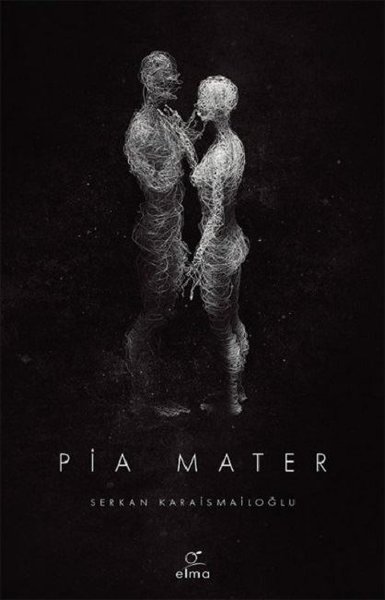
Pia Mater
Serkan Karaismailoğlu
Zihnin Labirentlerinde Bir Gerilim: "Pia Mater" Bilim ve edebiyatı bir araya getirme çabası, çoğu zaman bir tarafın diğerinin gölgesinde kalmasıyla sonuçlanan riskli bir girişimdir. Bir
İncelemeyi Oku