




The 23rd and 24th verses of Surah Al-Isra in the Qur'an lay out the proper conduct toward parents in such refined language that these words have continued to touch the conscience of humanity for centuries. Allah does not merely say "show respect" — He prohibits even the smallest violation of it. The word "uff" is the briefest expression of weariness in our language. A sigh, a slight frown, a tone that hardens just a little... All of these fall within the scope of this prohibition. The fact that Allah draws the boundary of prohibition at this smallest possible point is profoundly significant: respect is not a technical obligation imposed from the outside, but a heartfelt refinement that comes from within. As the language of the verse progresses, the depth of its commands increases. The expression "do not scold them" covers not only verbal but also behavioral forms of rudeness. The command "speak to them a noble word" is emphasized especially in old age, for that period is the most fragile stage for both the body and the emotions. Perhaps the most powerful image in the verse is this: "Spread over them the wing of humility out of mercy." This expression describes a biological role reversal. The parents who once sheltered the child beneath their wings are now the ones in need of shelter — and now it is the child who must spread those wings. Yet the nuance here is critical: this protection is to be offered not with arrogance, but with mercy. It is not the strong looking down upon the weak; rather, it is acting with a moral memory, with the consciousness of honoring the debt of the past. The final command of the verse is perhaps the most deeply moving of all: "My Lord! Have mercy upon them as they raised me when I was small." The child does not attempt to repay the efforts of the parents directly, for that debt cannot be repaid. Instead, he entrusts that labor to Allah, to the greatest Mercy. This is the most mature form of gratitude. The Bar of Patience: The Pinnacle of Self-Discipline The fact that the verses employ such precise language points to how profound a degree of self-discipline the subject demands. At first glance, not saying "uff" may seem simple. But not feeling impatience inwardly, not letting weariness show on one's face, not slamming doors, not raising one's voice, not wearing a sullen expression — sustaining all of these together requires a person to genuinely confront themselves. The special emphasis on old age is not coincidental. Old age is a period in which irritability, forgetfulness, and physical and emotional fragility increase. Parents may be harsh toward their child without justification; they may project the exhaustions of the past onto the relationship of today. And yet, on the child's side, there is still no "uff." This asymmetry is a deliberate moral choice. For in childhood, the parents also lived an asymmetry: they cared without expecting anything, with unconditional love. Now, faithfulness is not about reversing that asymmetry — it is about consciously continuing that same unconscious generosity. While the modern world prescribes "take care of yourself, cut off relationships that exhaust you," the Qur'an speaks an entirely different language. It does not recommend severing the relationship, but sustaining it in a moral form. Patience here appears not as passive submission, but as an active, conscious, and heartfelt choice. Yet here too there is a balance: what the Qur'an proposes is not enduring at the cost of self-annihilation, but being able to set boundaries while preserving one's ethics. The Wisdom of Having Children: The Prayers of the Messengers and the Measures of Jahiliyyah Alongside the profound message of Surah Al-Isra, the Qur'an does not treat the matter of having children as merely a biological or social phenomenon. The prayer of Messenger Ibrahim — "My Lord! Grant me a righteous son" (As-Saffat, 100) — and the supplication of Messenger Zakariyya in his old age stand as examples in this regard. In desiring children, neither sought the continuation of lineage, numerical superiority, or worldly advantage; both intended to raise a righteous generation that would carry the banner of tawhid. This defines the true measure of having children: a child is both a blessing and a grave trust. Yet today, the reasons billions of people have children do not align with this measure. Social pressure, anxiety over the continuation of lineage, the calculation of finding a caretaker in old age, or sheer personal desire — these are precisely what the Qur'an characterizes as the measures of the Jahiliyyah mindset. Verses 189 and 190 of Surah Al-A'raf approach this matter from a striking angle: after a couple is granted a healthy child, their turning to associate partners with Allah instead of giving thanks lays bare how a child can become an object of idolization. An understanding that places the child at the center of life, sacrifices everything for the child, and elevates the child above Allah unknowingly causes harm to the belief in tawhid. Verses 10 through 14 of Surah Al-Ma'arij depict the consequences of this error in the Hereafter with a sense of horror: on the Day of Resurrection, those who in this world sacrificed everything for their children will wish to sacrifice even their own children for their own salvation. This is the tragic outcome of misplaced priorities. True love is not to idolize the child, but to see the child as a trust from Allah and to bear the responsibility of raising that child upon tawhid. As Surah Adh-Dhariyat, verse 56, reminds us, the purpose of man's creation is servitude to Allah. This purpose does not change in child-rearing — on the contrary, it deepens further. The Limits of Obedience: The Equation of Surah Luqman Alongside the verses commanding kindness and respect toward parents, the Qur'an also draws the boundaries of this relationship with great clarity. Verse 15 of Surah Luqman establishes this balance with a foundational statement: if parents compel a person toward mushrik conduct — associating partners with Allah — or toward behavior contrary to Allah's commands, they are not to be obeyed. Yet conducting oneself well with them in the world is still commanded. That is, disobedience does not become a license for disrespect; noble speech and moral conduct continue nonetheless. But when Allah's pleasure is at stake, that pleasure takes precedence over every form of human authority. This balance is frequently overlooked in religious communication. Friday sermons emphasize the importance of treating parents well, yet the ruling in Surah Luqman — "do not obey them" — is rarely voiced. This one-sided transmission aligns with the situation warned against in verse 85 of Surah Al-Baqarah: believing in one part of the Book while disregarding the rest. The selective presentation of verses prepares the ground for a shallow and formalistic understanding of religiosity to take root in people. This understanding — known among the public as "lukewarm Islam" — leads to the proliferation of individuals who have failed to grasp the true moral vision of the Qur'an. Today, many parents raise their children not with Islamic values but solely with a mentality focused on academic success, career, and material gain. This constitutes a neglect of spiritual responsibility. As Surah Adh-Dhariyat declares, man was created for servitude to Allah alone. If a parent is leading a child away from this path, then the child's resistance to such misguided teachings — out of regard for Allah's pleasure — is a morally sound stance in accordance with the Qur'an. True Freedom: From the Slavery of the Nafs to Submission to Allah Behind all these matters lies a more fundamental problem: how the modern person, while imagining himself to be free, actually establishes a form of slavery to his own nafs and to the approval of others. Verse 43 of Surah Al-Furqan lays this bare with a striking question: "Have you seen the one who has taken his own desire as his god?" When a person makes his desires and passions the purpose of his life — endlessly pursuing higher status, greater fame, more approval — he has made those desires his deity. Verse 157 of Surah Âl-i Imran reminds us of the worthlessness of everything accumulated in this world when measured against a life lived in accordance with Allah's pleasure. Climbing career ladders, being applauded, winning society's admiration — all of this fades with death and leaves no trace behind. But a small act of goodness done in the way of Allah is an investment for eternal life in the Hereafter. The example in verse 29 of Surah Az-Zumar makes this reality even clearer: the contrast between a complicated man owned by many quarreling partners and a serene man bound to a single master alone. Whenever a person places servitude to Allah alone at the center of his life, he is freed from being a slave to his nafs, to his desires, and to the approval of others. True freedom lies within this submission. Mercy, Trust, and Submission This vast moral framework — beginning with the command of Surah Al-Isra that prohibits even saying "uff" to parents — finds its full meaning within a broad coherence that extends to the wisdom of having children, the limits of obedience, and liberation from the slavery of the nafs. Mercy and patience toward parents is not merely a duty, but a moral memory that carries the consciousness of honoring the debt of the past. Having children is not a biological or social necessity, but a responsibility to raise a generation that will carry the belief of tawhid. And obedience is neither absolute nor unconditional; it reaches its limit at every point where it surpasses Allah's pleasure. And at the root of all of this lies the following truth: man was created not for the approval of others, for career titles, or for material accumulation — but solely for servitude to Allah. The person who lives this servitude sincerely and from the heart spreads the wing of mercy over his parents, sees his child as a trust, and — freed from the deceptive promises of the nafs — attains true freedom. "Have you seen the one who has taken his own desire as his god?" — this question awaits us to ask it of ourselves anew at every moment. Our answer determines the direction of our lives.

KİTAP İZLERİ
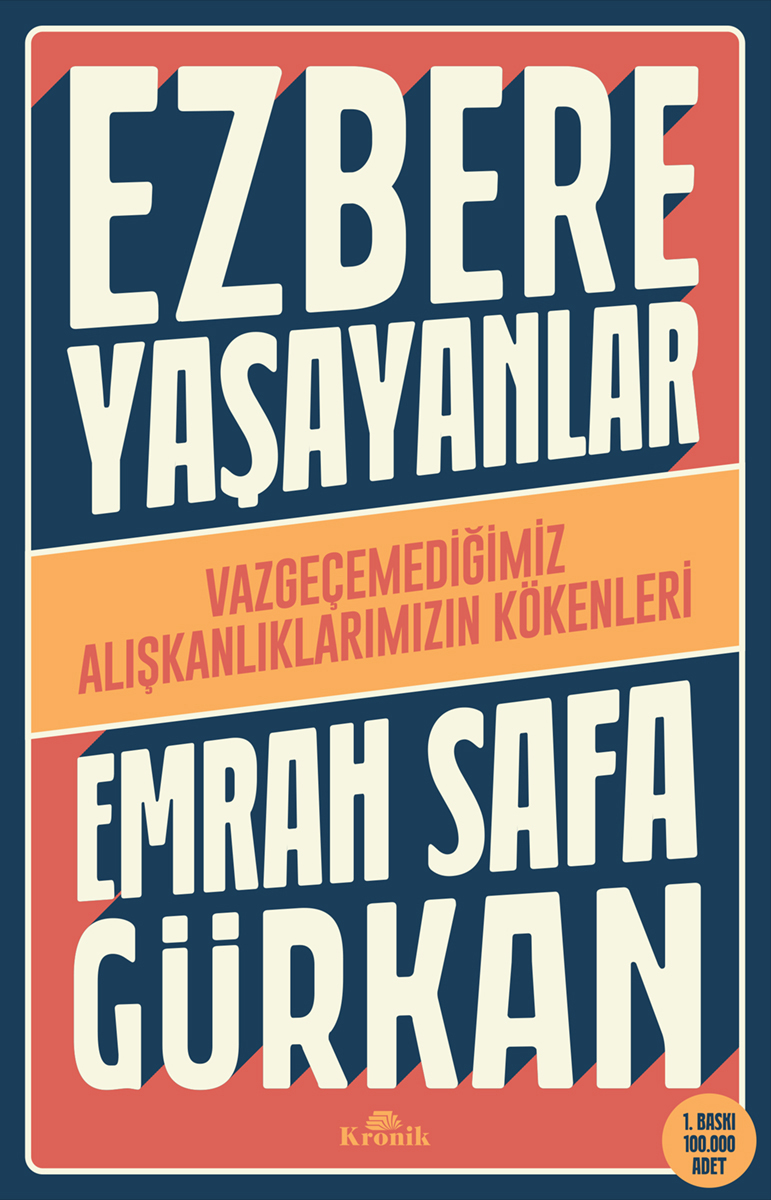
Ezbere Yaşayanlar: Vazgeçemediğimiz Alışkanlıklarımızın Kökenleri
Emrah Safa Gürkan
"Ezbere Yaşayanlar": Modern Bireyin Konforlu Yanılgılarına Zihinsel Bir Baskın Emrah Safa Gürkan'ın kaleminden, "biricik" olduğumuz yanılgısına neşter vuran, disiplinler arası bir entelektüel serüven. Herkesin kendini
İncelemeyi Oku